

Data 01
Prospects
System of recordDynamics 365
What happens
They are sent to the ERP only when they become customers.
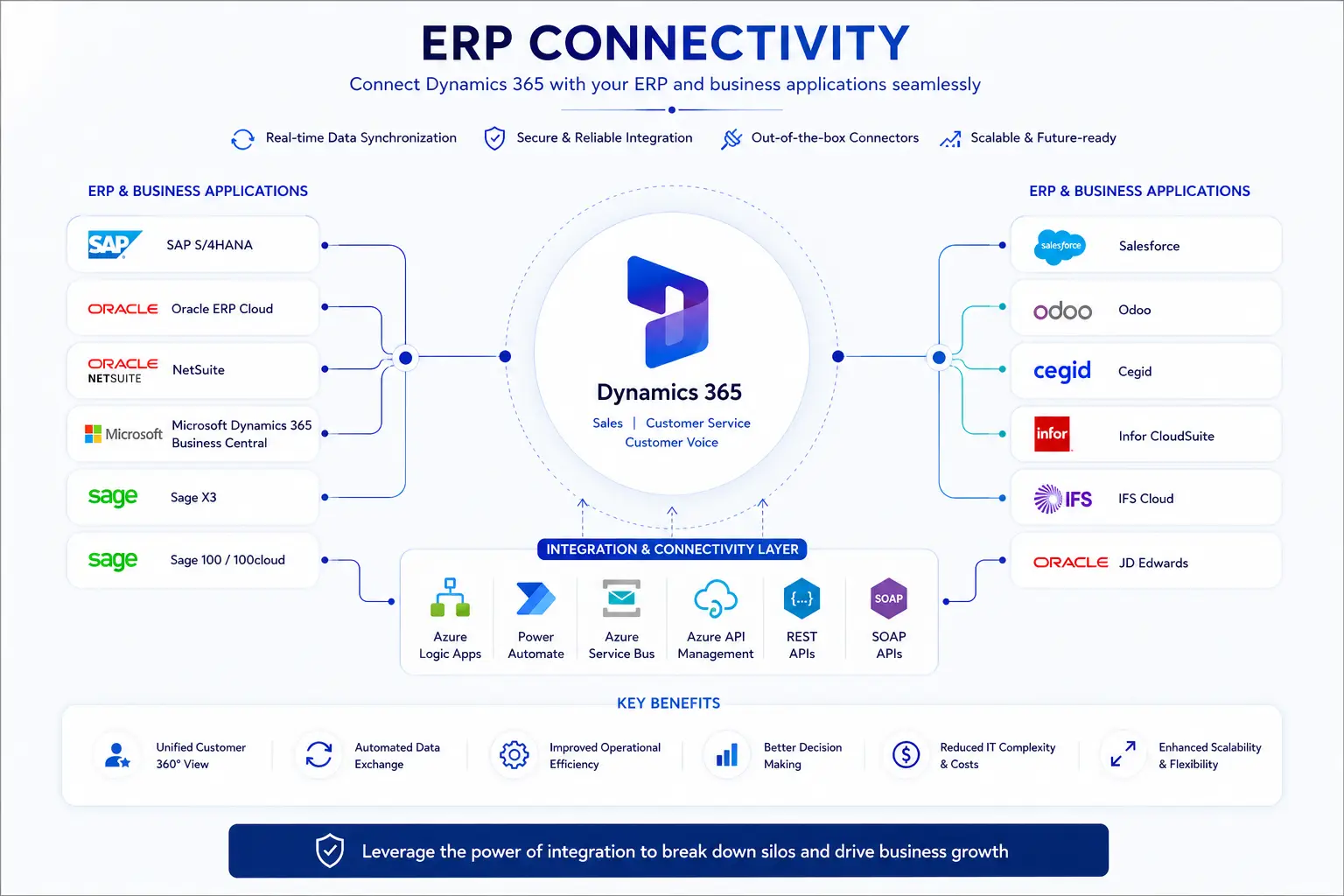
We design the Dynamics 365 and Dataverse side of the integration in coordination with your ERP owner or integrator.
Products and customer records can flow from the ERP to Dynamics 365 Sales, while approved orders return to the ERP through Dataverse and configured integration flows. Customer updates follow the agreed system of record.
Business Central provides a Dataverse integration. Finance & Operations can use dual-write or API-based flows, depending on prerequisites and scope. Your ERP specialist validates ERP rules; Benly Consulting handles the Dynamics 365 Sales side.
Microsoft documentation: Business Central integration · Finance & Operations dual-write.
 View full resolution
This decision defines the direction of the flow and ownership when an error occurs.
They are sent to the ERP only when they become customers.
One source is retained to prevent duplicates and discrepancies.
The ERP sends the information salespeople need to Dynamics 365.
The order is sent to the ERP, which confirms successful receipt.
The ERP returns the useful status to Dynamics 365 for the teams.
Example: a prospect can remain mastered in the CRM, then become an invoiced customer mastered by the ERP after the first order.
The ERP owner validates their system; Benly Consulting builds and tests the CRM side.
The estimate depends on interfaces, volumes, rules and flow criticality.
ERP owner availability and access to the interfaces are the main schedule dependencies.
Thirty minutes to identify the systems, priority data, ERP owner and first interface to assess.