| Dynamics 365 SalesCRM | Manage leads, opportunities, activities, forecasts and account relationships. | Sales representatives, managers and revenue operations. | Microsoft: Base from €56.30 / user Second app: Attach from €19 / user Implementation: Benly Sales starter: €9,900 fixed Source |
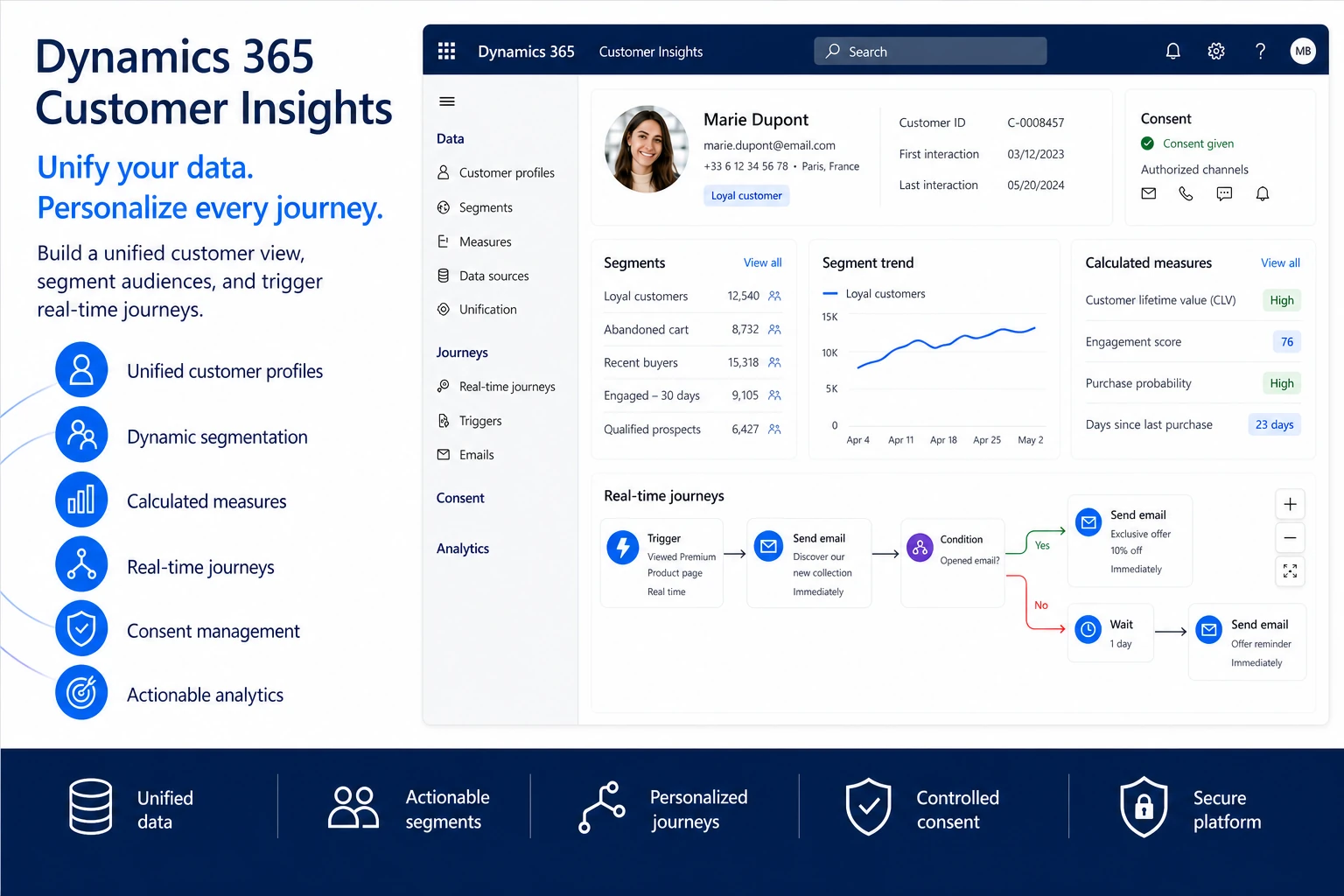
| Dynamics 365 Customer InsightsCRM | Unify customer profiles and orchestrate real-time customer journeys. | Marketing, customer experience and data teams. | Microsoft: Base €1,473.00 / tenant Second app: Attach €866.50 / tenant; 10 eligible base licences required Source |
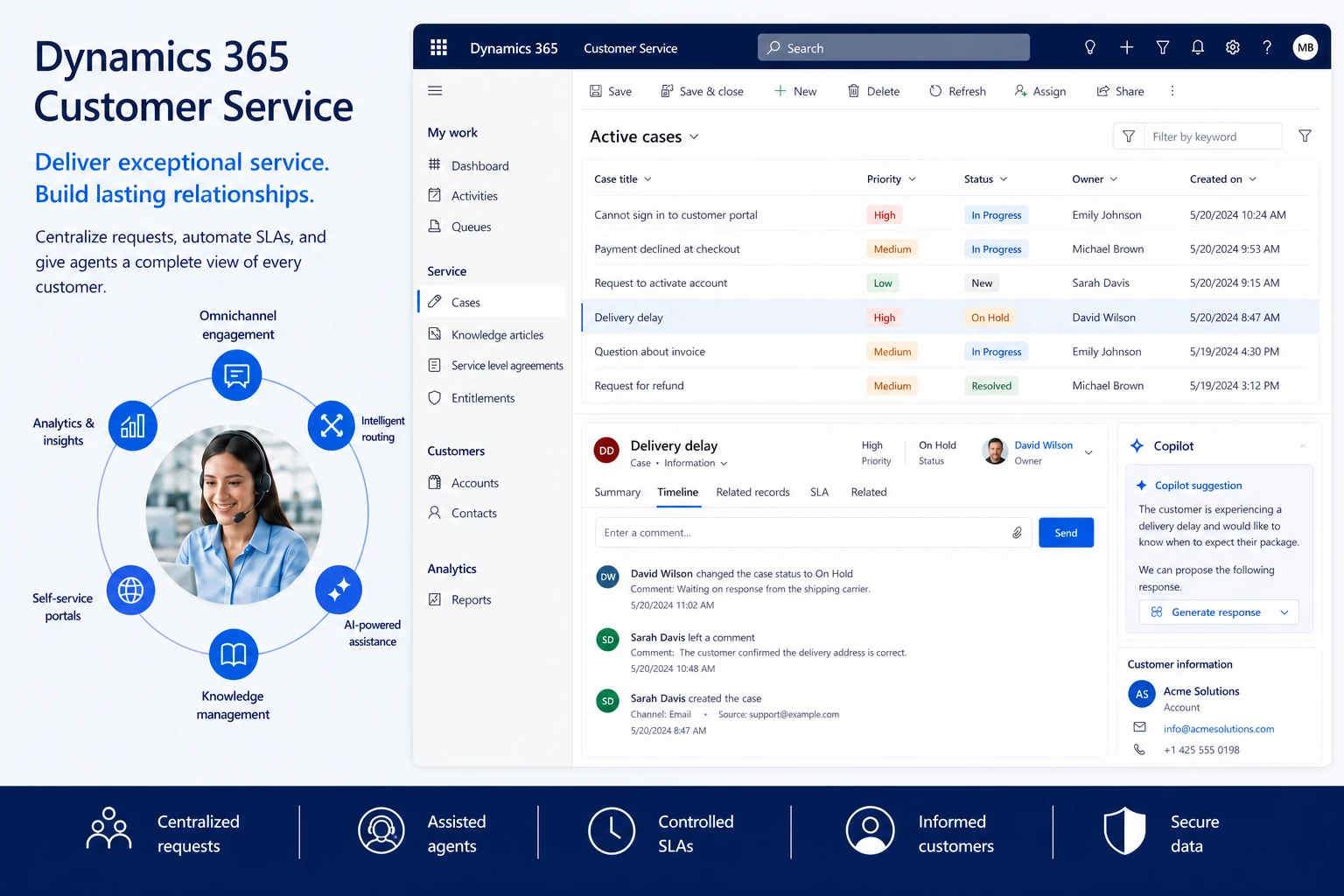
| Dynamics 365 Customer ServiceCRM | Manage cases, queues, service levels, knowledge and agent work. | Support agents, team leaders and service managers. | Microsoft: Base from €43.30 / user Second app: Attach from €19 / user Source |
| Dynamics 365 Contact CenterCRM | Coordinate voice and digital customer conversations across channels. | Contact-centre agents, supervisors and quality teams. | Microsoft: Base €95.30 / user Second app: Customer Service Enterprise add-on: quote Source |
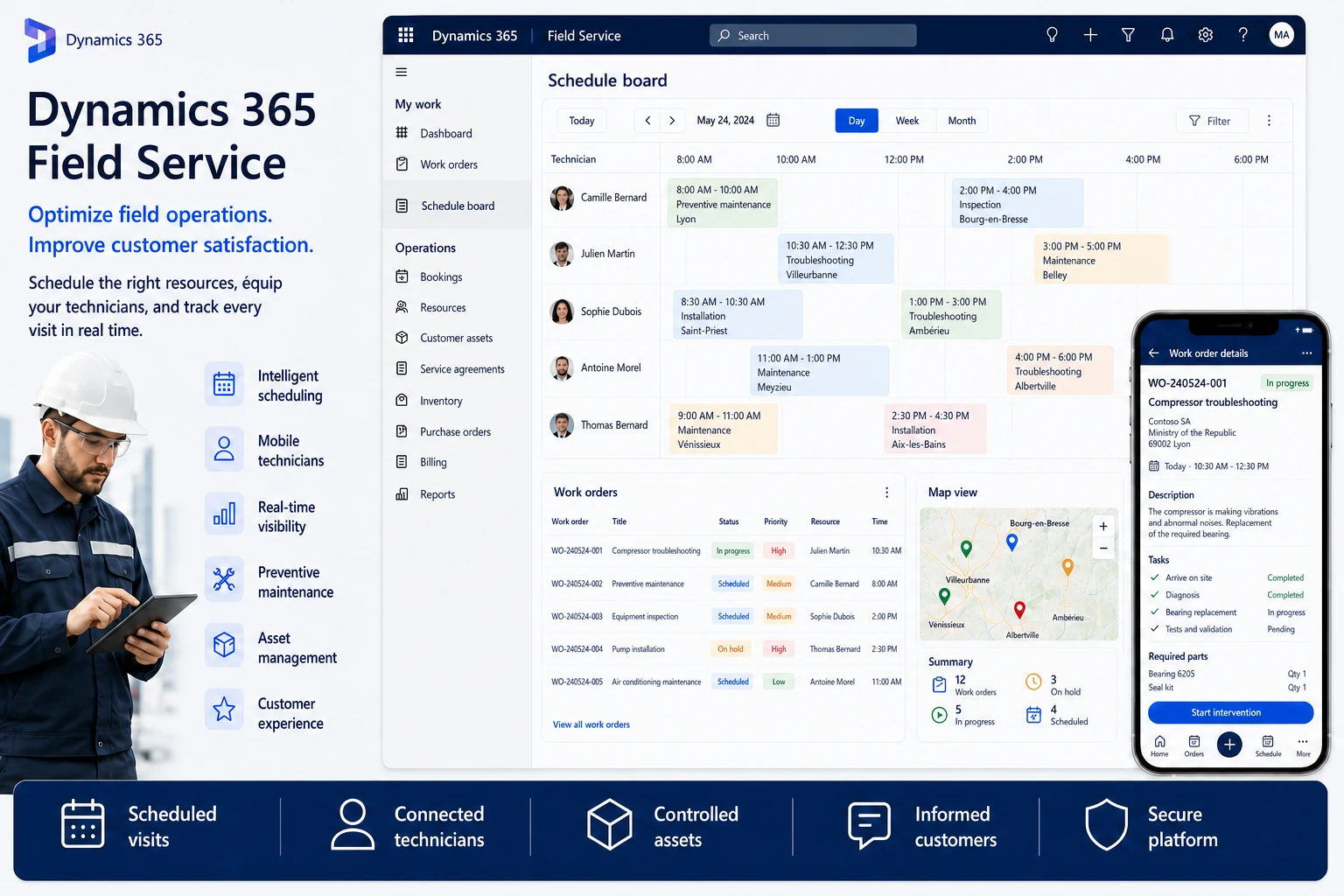
| Dynamics 365 Field ServiceCRM | Plan work orders, dispatch resources and support mobile technicians. | Dispatchers, technicians and service operations. | Microsoft: Base €91.00 / user Second app: Attach from €19 / user Source |
| Dynamics 365 FinanceERP | Control accounting, cash, budgets, assets and financial reporting. | Finance directors, controllers and accounting teams. | Microsoft: Base €182.00 / user Second app: Eligible Attach: regional quote Source |
| Dynamics 365 Supply Chain ManagementERP | Manage procurement, planning, manufacturing, inventory and warehousing. | Operations, procurement, production and logistics teams. | Microsoft: Base €182.00 / user Second app: Eligible Attach: regional quote Source |
| Dynamics 365 CommerceERP | Connect digital commerce, stores, orders, pricing and customer experiences. | Retail, ecommerce, merchandising and store operations. | Microsoft: Base €182.00 / user Second app: Eligible Attach: regional quote Source |
| Dynamics 365 Project OperationsERP | Run project sales, resourcing, delivery, time, expenses and billing. | Professional services, project managers and finance teams. | Microsoft: Base €117.00 / user Second app: Eligible Attach: regional quote Source |
| Dynamics 365 Human ResourcesERP | Manage employee records, benefits, leave and workforce processes. | HR operations, managers and employees. | Microsoft: Base €117.00 / user Second app: Eligible Attach: regional quote Source |
| Dynamics 365 Business CentralERP | Combine finance, sales, purchasing, inventory, projects and operations for SMEs. | Finance and operational teams in small and midsize businesses. | Microsoft: Essentials €69.30 / user Second app: Selected CRM Attach from €19 / user Source |
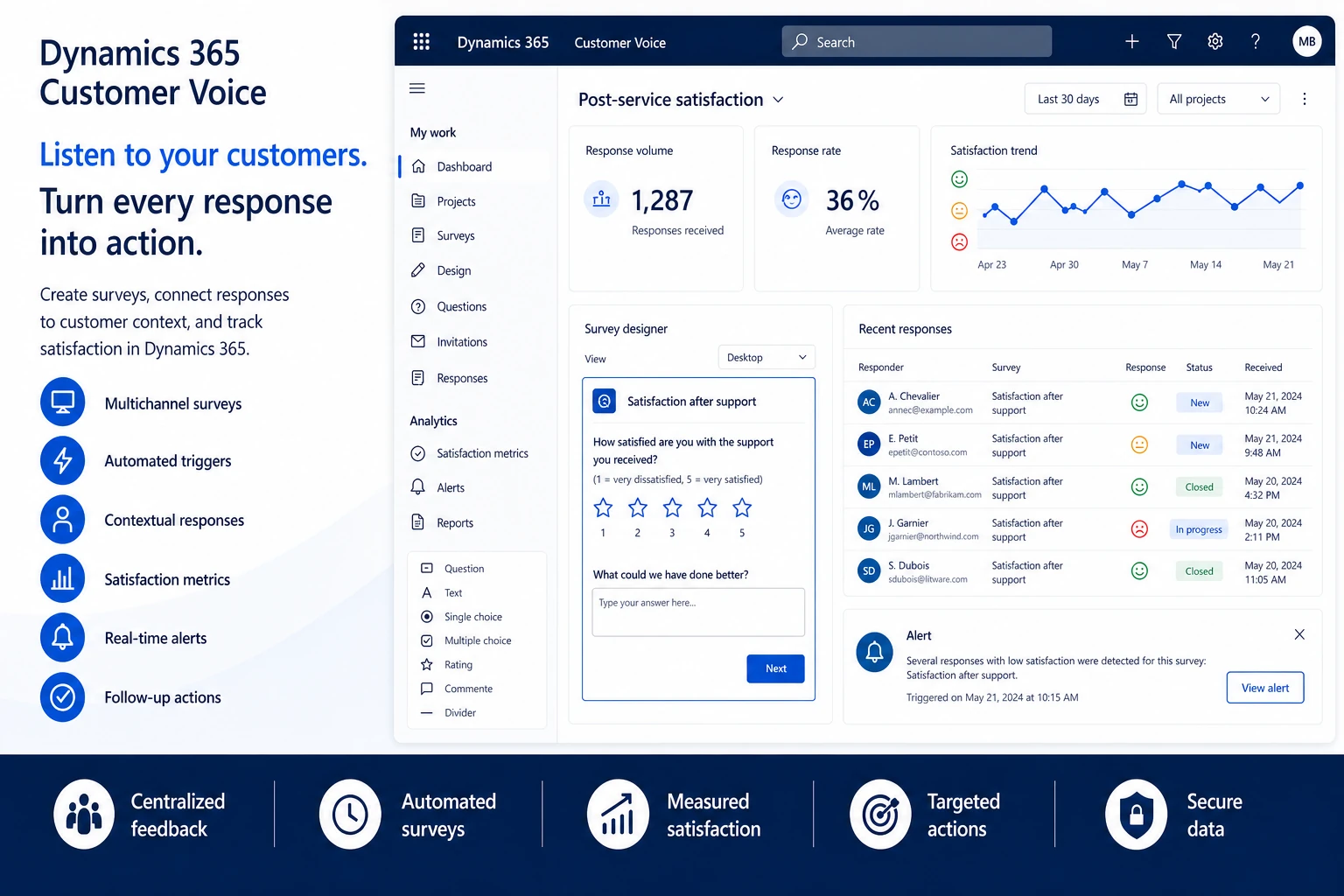
| Dynamics 365 Customer VoiceCRM extension | Collect surveys and connect feedback to customers and business events. | Customer experience, service and insight teams. | Microsoft: Entitlement or response capacity; no standalone user licence Second app: 2,000 responses per tenant and month with eligible Enterprise products Source |